
EMR Consulting News and Insights

Tag Archives: EHR

Interoperability: The Keynote vs. the Fax Machine Version

Interoperability The Keynote Version vs the Fax Machine Version

A home health agency needs a signed physician order before a visit counts, before billing can proceed, and before a surveyor will call the chart clean. The physician who has to sign it might be a mile away. The practice might even run on the same EHR vendor as the agency. Neither helps. The two systems do not talk, so the order goes out the only way it can, by fax. Someone calls to confirm it arrived. Someone calls again three days later because it did not. Multiply that across the open orders on an active census, every week.

That is what an interoperability failure looks like on the ground: a signature stalled in a fax queue while a clock nobody can see keeps ticking. The keynote version of interoperability is measured in records exchanged and networks connected. The floor-level version is measured in hours on hold, waiting to learn whether a piece of paper made it to a provider’s pen.


Before You Buy Another EHR Module, Ask These 10 Questions

EHR Module 10 Questions

The practice is struggling with a workflow. Scheduling takes too long, prior authorizations pile up, referral follow-up is inconsistent, and staff document the same information in multiple places. The immediate response is often that the practice needs another module.

Maybe. But healthcare organizations accumulate technology faster than they optimize it, and more technology does not automatically produce a better workflow. Sometimes the system genuinely lacks a capability.

Just as often, the problem lives somewhere else and only looks like a technology failure from a distance.

The EHR Super User Problem: When One Person Becomes the System

The EHR Super User

Every healthcare organization has someone who knows the EHR better than anyone else. They know the templates, the reports, the workarounds, and how to fix the problem nobody else understands. These people are valuable, and mature organizations should have them.

But there is a difference between having a super user and depending on one, and when critical knowledge lives in a single person, the organization has built a single point of operational failure.

Your Support Queue Already Knows What to Fix First

Your Support Queue Already Knows What to Fix First

Ninety days after go-live, the support queue is the most honest record your agency keeps. Workarounds and training gaps and failing interfaces all end up there as tickets. Most teams read the queue one case at a time, close what they can, and move on. Almost nobody adds it up.

A Pareto chart is how you add it up. Sort your issue categories from most frequent to least, run a cumulative percentage line across the top, and mark where the line crosses 80%. The categories left of that mark are where your attention belongs, and it is usually a shorter list than people expect. Everything to the right is real. It is just not where the leverage is.

The Best EHR Implementation I Ever Saw Was Not Run by IT

The Best EHR Implementation I Ever Saw Was Not Run by IT

The best EHR implementation I ever saw was not run by IT.

Working on the vendor side, I delivered the same software to organizations that got very different results from it. The product was not the variable. The consequences were.

In most implementations I delivered, the project lived inside IT. The business case justified the purchase, then went into a drawer. Department leaders showed up for demos, signed off on timelines, and reappeared at go-live to ask why things looked different.

The project team carried the weight, and when adoption lagged, it was treated as a training problem. The executives who approved the spend were rarely the ones accountable for the return. The most commonly blamed party was the vendor. Their poor implementation was why adoption struggled. It was not the whole story.

How to Build a Successful Healthcare Technology Team

In the healthcare space, much attention is often paid to the implementation of revolutionary new technology from electronic health records (EHR) and enterprise resource planning (ERP) systems to analytics and cybersecurity solutions. Certainly, this is understandable given the importance of these functions to healthcare data management and the rapidly evolving capabilities of these systems to […]

Meaningful Use in the ER: Interview with Dr. Whitney Kiebel

Andy Slavitt Death Knell

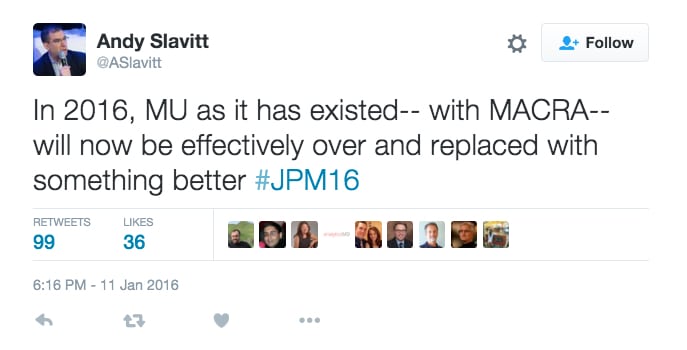
The writing has been on the wall for years and CMS has read it. While the Meaningful Use program may have achieved its goal of widespread EHR adoption, the time has come to focus on performance and patient outcomes. While the program can be hailed for catalyzing a wave of modernization in the healthcare industry, it […]

We Provide Top IT Talent for Payer and Provider Market

As a leading provider of top IT talent to the Payer and Provider market nationwide, HealthTECH views itself as a kind of “Sports Agent” acting on behalf of our hospital and managed healthcare insurance clients nationwide. We understand our clients resource needs and initiatives, with over 20 years of industry experience we understand who the […]